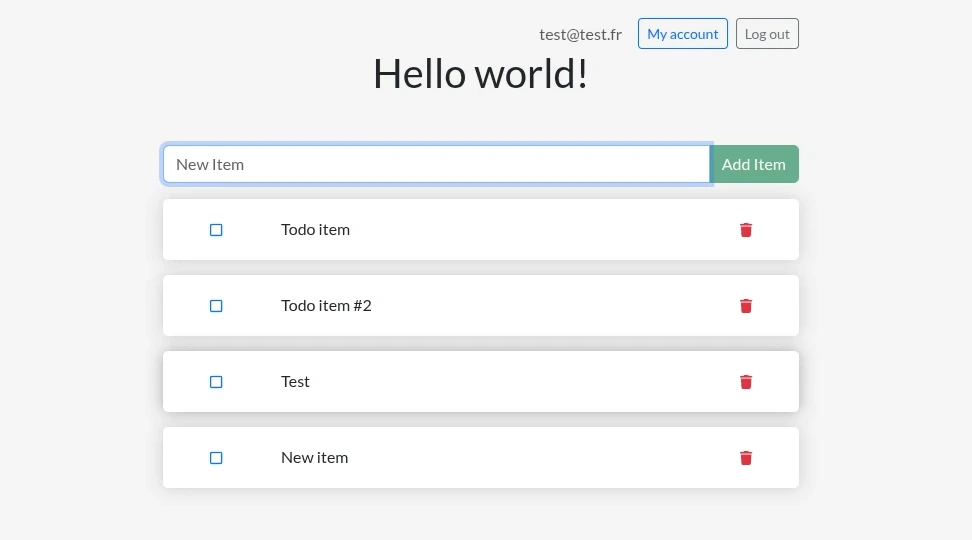
Context & Business Challenges
As part of earning my Master's degree in Software Engineering (Bac+5 / French RNCP Level 7 Title) at Ynov Campus Strasbourg, I spearheaded the complete transformation of Docker's reference Getting Started Todo App into a scalable Cloud-Native and DevSecOps distributed platform.
The goal was to demonstrate mastery across the modern software engineering lifecycle: designing a modular microservices architecture, automating cloud infrastructure via Infrastructure as Code, enforcing Zero-Trust security principles, and managing operational reliability (MCO).
Cloud-Native Architecture & Infrastructure as Code (IaC)
The application infrastructure is declared and provisioned entirely through Terraform on Microsoft Azure:
- Managed Kubernetes Cluster (Azure AKS): Orchestration of containerized services (React frontend, Node.js/Express backend API, dedicated Auth service, and managed MySQL).
- Isolated Virtual Network & Zero-Trust: Deployed within a segregated private VNet, eliminating public internet exposure for the database tier.
- Secure Secret Ingestion: Secrets injected directly into container memory via the Azure Key Vault Secrets Store CSI Driver, eliminating plain-text credentials in config files or application code.
DevSecOps Pipeline & Operational Reliability
Federated CI/CD & Vulnerability Scanning
- OIDC (OpenID Connect) Federation: GitHub Actions workflows authenticated against Azure using short-lived tokens without any static API keys or long-lived passwords in repository secrets.
- Continuous Security Analysis: Automated container image scans using Trivy prior to registry publishing (Azure ACR), combined with automated dependency audits via Dependabot.
- Automated Helm Deployments: Progressive rollouts powered by Helm charts utilizing Rolling Update strategies to achieve seamless Zero-Downtime releases.
Resilience & Observability
- Decoupled Kubernetes Probes: Tuned
readinessandlivenesshealth checks to safely recycle unhealthy pods without user-facing request drops. - Load Validation: Systematic load-testing sessions under k6 demonstrating p95 response times < 300 ms and upholding an SLA exceeding 99.9%.
Impact & Key Results
- 99.9% SLA validated under simulated peak traffic with progressive load distribution.
- 0 static secrets maintained across the entire CI/CD pipeline and Git repositories.
- Zero-Downtime deployments: Version upgrades performed without user disruption.
- RNCP Level 7 Validation: Full accreditation awarded for Cloud-Native software design and operational lifecycle management.
Documentation & Resources
The complete technical dossiers submitted for RNCP title defense are available for review: